Traditional retail thinking isnt working: it’s time to change now or shut up shop

Flawed thinking
The increasing failure of traditional retail businesses as they struggle to keep up with the online competition is not just due to the margin-sapping costs of bricks and mortar store estate. It is the fundamental constraint imposed by a turgid, slow-moving business model that is failing to keep pace with a phenomenal rate of change. Just consider, traditional retailers are still working on consolidated distribution models, investing in not only five or ten year leases on expensive warehouse space but also budget breaking bespoke warehouse operations that can take years to develop and implement. In contrast, newcomers are adopting widely dispersed distribution models that leverage the growing on-demand, pay as you warehouse model. Stowga CEO Charlie Pool The result? Traditional retailers have massive investment tied up in underused warehouse space with no option to quit and no chance to innovate; while newcomers can experiment with agile distribution models, switching on and off new locations on demand, without penalty or constraint, to continuously improve the customer experience. The gulf in business outcomes is immense. And this is just one example. Every aspect of the traditional retail mindset is flawed. Even when companies talk innovation and change, when they admit the need to improve the customer experience to embrace next or same day delivery, the results are failing to match up. The reasons are clear: a painful combination of tortuous decision making and unattainable short-term goals.Unconscionable delay
Retailers may pay lip service to the need to respond to the extraordinary pace of change and the impact of technology innovation on customer expectation, but the reality is still painful. Long, drawn out decision making processes, insistence on old-school sign off on incredibly detailed briefs and an adversity to risk that demands any change be tested to the extreme before it is released. A new website, for example, will take months and months to brief, spec, build and test; by the time it is ready, it will be out of date and aeons behind the competition. At the same time, the financial goals are far too short term. Whether it is the shackles of shareholders or private equity investors looking for fast returns, traditional retail models are still dominated by short-term goals and lack of appetite for taking risks, meaning there is neither chance nor inclination to innovate. This is at complete odds with the culture of continuous improvement and iteration embraced by startup companies, many of which are also supported by Venture Capitalists (VC) with the nous to recognise that longer term thinking is essential. Amazon took years to turn a profit simply because founder Jeff Bezos recognised the need to continually reinvest revenue to drive innovation and beat the competition. What is now one of the biggest companies in the world would never have survived the short-term financial goals now imposed on most traditional retail businesses. Read more:?Britain’s five favourite online shopping impulse purchases revealed It is somewhat ironic that failing retailers are being charged with stretching the boundaries of financial practice by exploiting the Company Voluntary Arrangement (CVA) loophole to close stores, given that it is the embedded lack of innovative thinking that has created these financial problems. It is the mergers and acquisitions that have virtually eradicated differentiation and created a race to the bottom that has created the high street ubiquity increasingly rejected by a sophisticated consumer base. Yet such financial wriggling appears to be the priority right now rather than innovation required to provide any chance of avoiding what appears almost inevitable failure.Be brave
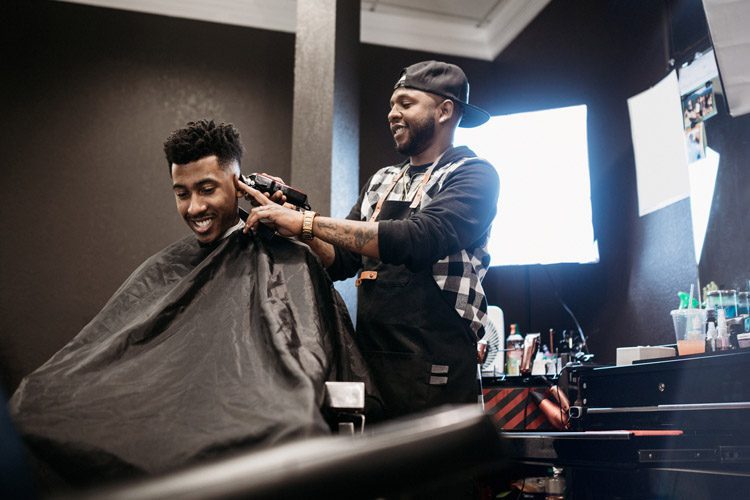
Are traditional retailers aware of the trend towards distributed, on-demand logistics models that are key to cost-effectively meeting customers? same day demands? Yes, but only as a chance to offload expensive and underused warehouse space; few are even considering how such a flexible model could support a better customer experience as evidenced by the fact that 75% of retailers using on-demand warehousing have been in business for less than five years. Traditional retailers are selling, not buying into warehouse innovation but that does, at least, demonstrate a recognition of the changing model. And perhaps, just perhaps, this awareness might begin to inspire some new thinking. __________________________________________________________________________________Barbershops, vapes and coffee: How independents are changing the face of UK high streets As pubs, estate agents and banks struggle to maintain a high street presence in 2018, new research has revealed which independent business are gaining a stronghold amidst the challenges facing retailers.